NOVEMBER 2026 EDITION  |  NOV 20 TO NOV 26

Tidal said this week it will start deleting wholly AI-generated music on December 9, and by its own count that is around 27 million tracks. In the same fortnight Suno shipped two new tools for making more. Those two facts only look contradictory until you read Tidal's wording, because the line it drew is not between AI and no AI. It is between a track a machine produced on its own and a track a person made using machines. Everything in this issue sits on one side of that line or the other, including a deadline we got wrong three issues ago and are correcting below.

A streaming app on a dark screen with a long list of track rows dimming out one by one

Tidal Will Delete Wholly AI-Generated Music on December 9. AI-Assisted Stays

Tidal announced on November 24 that from December 9 it will reject and remove "any wholly AI-generated track that's submitted to Tidal", and will also stop distributors delivering them. The numbers it gave are the story: about 27 million tracks already carry its AI tag, roughly 6.3% of the catalogue, and it says more than 43% of everything uploaded in the last 90 days was wholly AI-generated. On November 6 alone, more than 60% of that day's deliveries were. Two further figures come from TechCrunch rather than the post itself: the removals will take out more than 29 million songs by the end of the year, and Tidal says it will be rejecting roughly 80,000 to 85,000 tracks a day. Detection runs through its partner Ircam Amplify, and 94% of the tracks wearing its AI badge are attributed to Suno.

The sentence that matters to you is the other one. Tracks "assisted by AI tools, but not the sole outputs, will be allowed on the platform", and the delivery rule is that Tidal rejects a track "if their metadata says they were generated solely using AI tools". There is no published percentage, no threshold, and no artist-facing appeal route in any of the coverage.

What to do about it: Check what your distributor puts in the AI fields on your next delivery, because that metadata is what Tidal reads, and keep the stems, session files or lyric drafts that show a person did part of the work.

Read more →

A woman with a dark bob and an orange hair streak points at the camera in a white studio, under the words YOU ARE THE AI.

You Are the AI You Thought You Created | Claudia Music Video

Sleight of Mind with JC · 4:10

An AI-made music video that pulled 41,000 views from a channel with 416 subscribers, which is four minutes well spent if you want to see the production bar the tools are clearing this month.

Watch on YouTube →
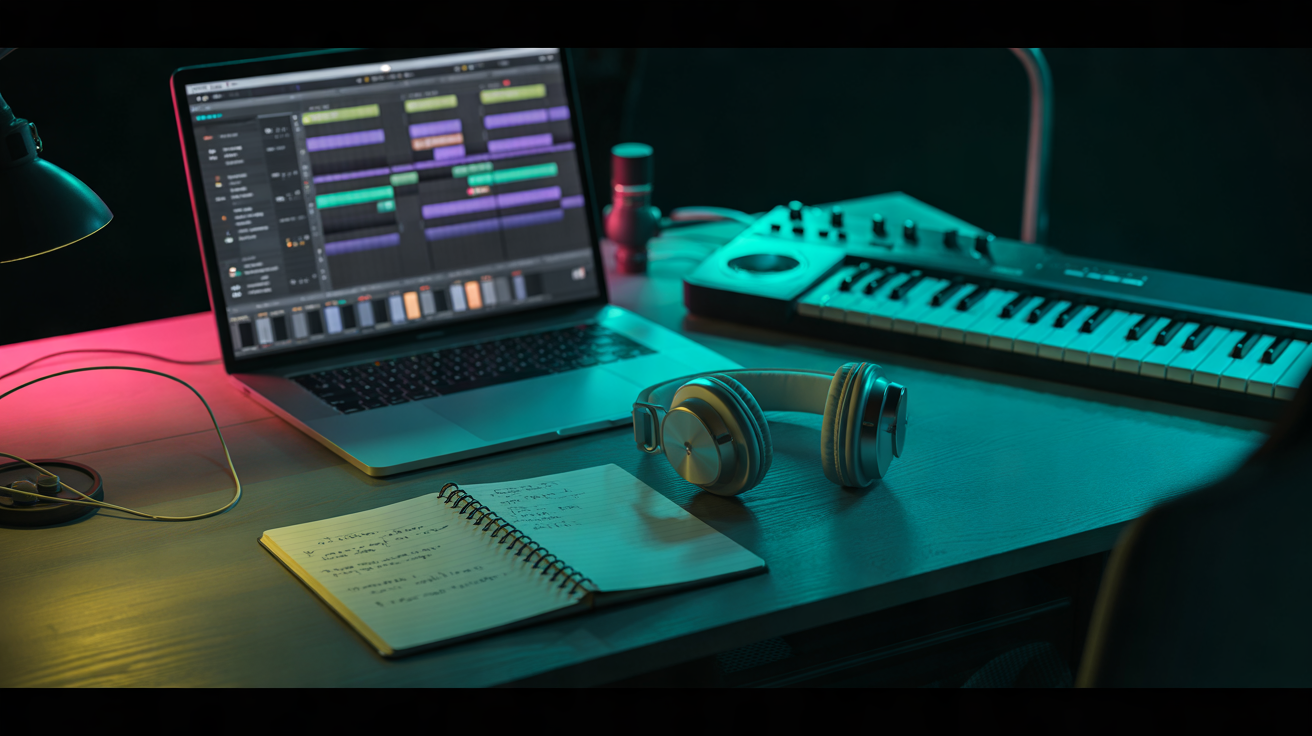
A laptop running a music production timeline with coloured audio clips, a notebook and headphones on the desk beside it

Suno Put Its Models Inside Ableton, Which Is the Side of Tidal's Line That Survives

Suno launched Bridge in beta on November 13: a standalone app that sits beside Ableton Live 12 on Mac and generates instrument and vocal parts that match your session's tempo, key, style, harmonic content and groove, then drops them onto the timeline. Both apps have to be open for it to work. It is included with Premier subscriptions, with no separate price given, and Suno says it plans to expand to other operating systems and DAWs.

One detail in the announcement deserves your attention before you try it: Bridge syncs by uploading your session files to Suno. That is how it hears the track it is writing to, and it is stated plainly in the post, but it means an unreleased project leaves your machine. Weigh that the way you would weigh any other cloud render.

What to do about it: A part you generated into your own arrangement is AI-assisted work by construction, which is the side of Tidal's line that stays up, so if you have been generating whole tracks this is the cheapest change you can make.

Read more →
1,000 Suno Prompts, a book of copy-paste style prompts tuned for Suno

1,000 Suno Prompts, Written the Way the Engine Reads

A book from AetherWave founder Andrew Froehlich: 1,000 copy-paste style prompts across every major genre. No filler, no artist names that get a track flagged. Paste one into AetherWave's Music Studio and keep going with identity, art and mastering.

Get the book →
A phone held up in a dark room showing a short vertical music video, light spilling onto the wall behind it

Suno Will Make the Video Too, On Its Own Credits and With Its Own Refusals

Four days after Bridge, Suno launched Visuals on web, iOS and Android. Drag a song in and it generates clips of up to 15 seconds that follow the song's structure, pick up the lyrics and lip sync, and you can extend, edit and re-prompt from there. It also makes lyric videos and album art, or builds a clip from a single photo.

Two things are worth knowing before you plan around it. Visual credits are bought separately from song credits, so this is a new line in your budget rather than something your existing plan covers. And Suno is refusing more than other video tools do: prompts and uploads that try to depict specific artists, public figures or copyrighted works are blocked, uploaded audio is checked against Audible Magic, ACRCloud and Musixmatch, and generated visuals carry embedded watermarks when shared off platform. Suno's own words: "Prompts that work on other video platforms may not work on Suno and that's by design."

What to do about it: Price the visual credits before you promise a client a video, and if you are licensing a clip onward, check what the embedded watermark means for that deal.

Read more →
A calendar page on a desk with one date crossed out and a later date circled beside it

We Printed the Wrong Deadline. You Have Until December 18, Not November 23

On November 13 this newsletter ran a section headed "You Have Until November 23 to Tell the Copyright Office What AI Music Is". That date was already wrong when we sent it, and the correction is ours to make.

The Copyright Office's Music Streaming Fraud inquiry (Docket No. 2026-6) opened on October 7 with initial comments due November 23 and replies due December 21. It then published an extension on November 5, eight days before our issue went out, moving initial comments to 5:00 p.m. Eastern Time on Friday December 18, 2026 and replies to 11:59 p.m. Eastern Time on Friday January 29, 2027. The Office's stated reason was to give the public "sufficient time to prepare responses to the Office's questions". We read the Federal Register notice itself rather than a summary, because two separate secondary sources we checked still carry the old dates.

So if you read that section and thought you had missed it, you have not. Comments go through regulations.gov, individuals may file under their own name, and the Office's own page carries the instructions.

What to do about it: If streaming fraud or AI-made tracks have affected what you earn, you have until 5pm Eastern on December 18 to say so in your own name, and until January 29 to reply to what others filed.

Read more →
The AetherWave Radio Network on air, a glowing dial and waveform on a dark background

If a Platform Will Not Carry Your Music, Carry It Yourself

AetherWave Radio plays independent artists around the clock, under their own names, and submitting a track costs nothing. For anyone who wants their own station rather than a slot on ours, Pro-Radio is $5 a month: a public station page, your own live stream address, and an embed you can put on your own site.

We are not pretending this replaces a streaming service, and we are not going to tell you a station is a distribution strategy. It is one more place your music plays where nobody can decide overnight that it should not exist.

What to do about it: Put one track somewhere you control this week, whether that is our radio, your own site, or a station of your own.

From AetherWave Studio. This section is about our own service, not reported news.

START A STATION →

The Line Is Not AI. It Is Whether a Person Did Part of the Work

Tidal did not ban AI this week. It banned tracks that are the sole output of a machine, and said in the same breath that AI-assisted music stays. Suno, whose models account for 94% of the tracks wearing Tidal's AI badge, spent the same fortnight shipping a tool that puts its models inside your DAW, which is to say a tool for making exactly the kind of music Tidal still wants. Read those two together and the direction is not hard to see. The question being asked of your catalogue is no longer whether you used AI. It is whether anyone can tell that you were there.

You cannot control how a detector classifies you, but you can control what evidence exists. Write the lyrics yourself and keep the drafts. Arrange, cut or play something on top of what you generate, and keep the session. Release under one name, consistently, so the work accumulates somewhere. None of that is a trick to beat a filter; it is the ordinary paper trail of having made something, and it happens to be what every rule being written this year is reaching for.

Submit to the Radio

Classifieds

Pro-Radio A new level for serious station owners. The public station page, your own live stream address, an embed. $5 a month.
24/7 Radio on YouTube Our round-the-clock AI station is live on YouTube right now, with a visualiser and the track on screen.
Lyric Videos Turn any song you have into a captioned lyric video, sized for YouTube, TikTok and Reels.
AetherWave Production See the work done on the platform. Official AetherWave portfolio. Subscribe for your own portfolio.