AetherWave Studio All services →
For Authors

You wrote it.
Now it needs to be a book.

Between a finished manuscript and a book someone can buy sits a stack of specifications nobody warns you about: trim sizes, bleed, spine math, fixed-layout files, metadata. We format, produce and prepare books and comics to the printer's real spec, delivered publish-ready for KDP and beyond. From $299. The books and comics on this page are ours, and one of the comics is on sale right now.

We publish our own

Every spec on this page was learned by shipping real books, not by reading about it. These are ours, produced start to finish on the same pipeline you are buying, and on sale right now.
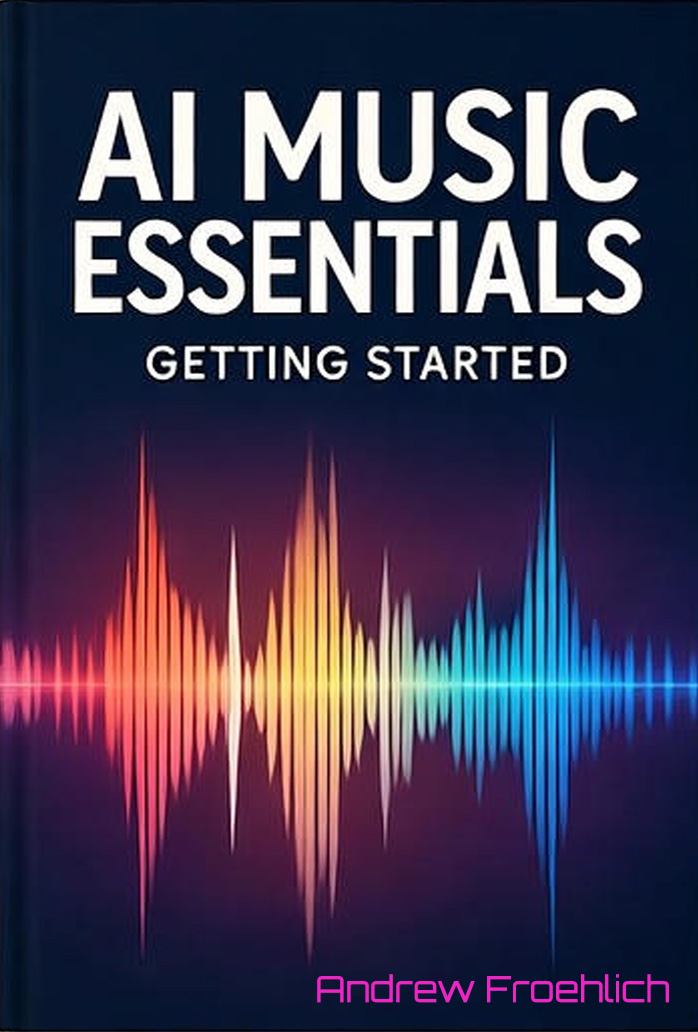
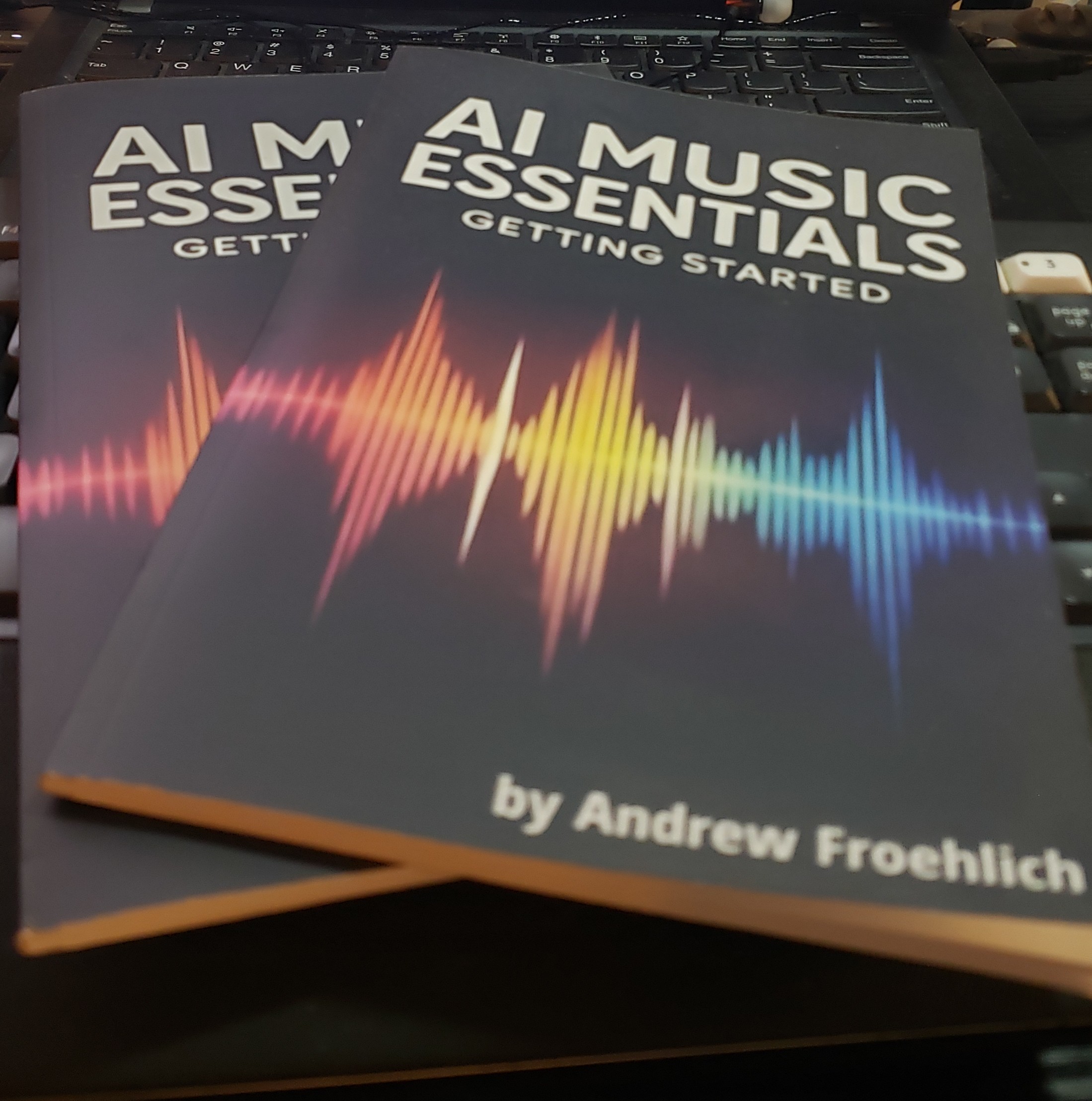
AI Music Essentials book cover
AI Music Essentials
Full production: manuscript, cover, interior, ePub.
1,000 SUNO Prompts handbook cover
1,000 SUNO Prompts
Reference layout: dense tables that survive the page.
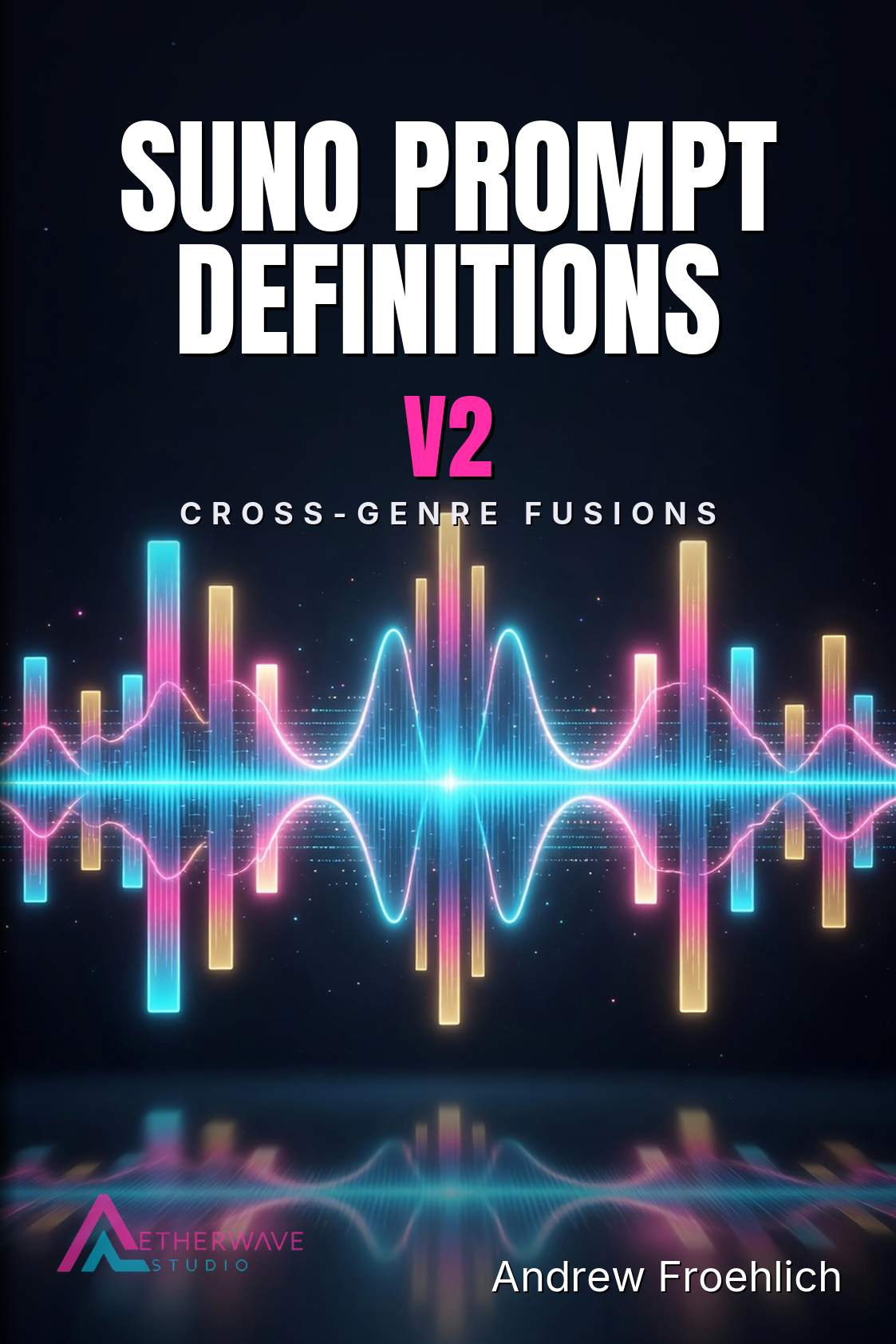
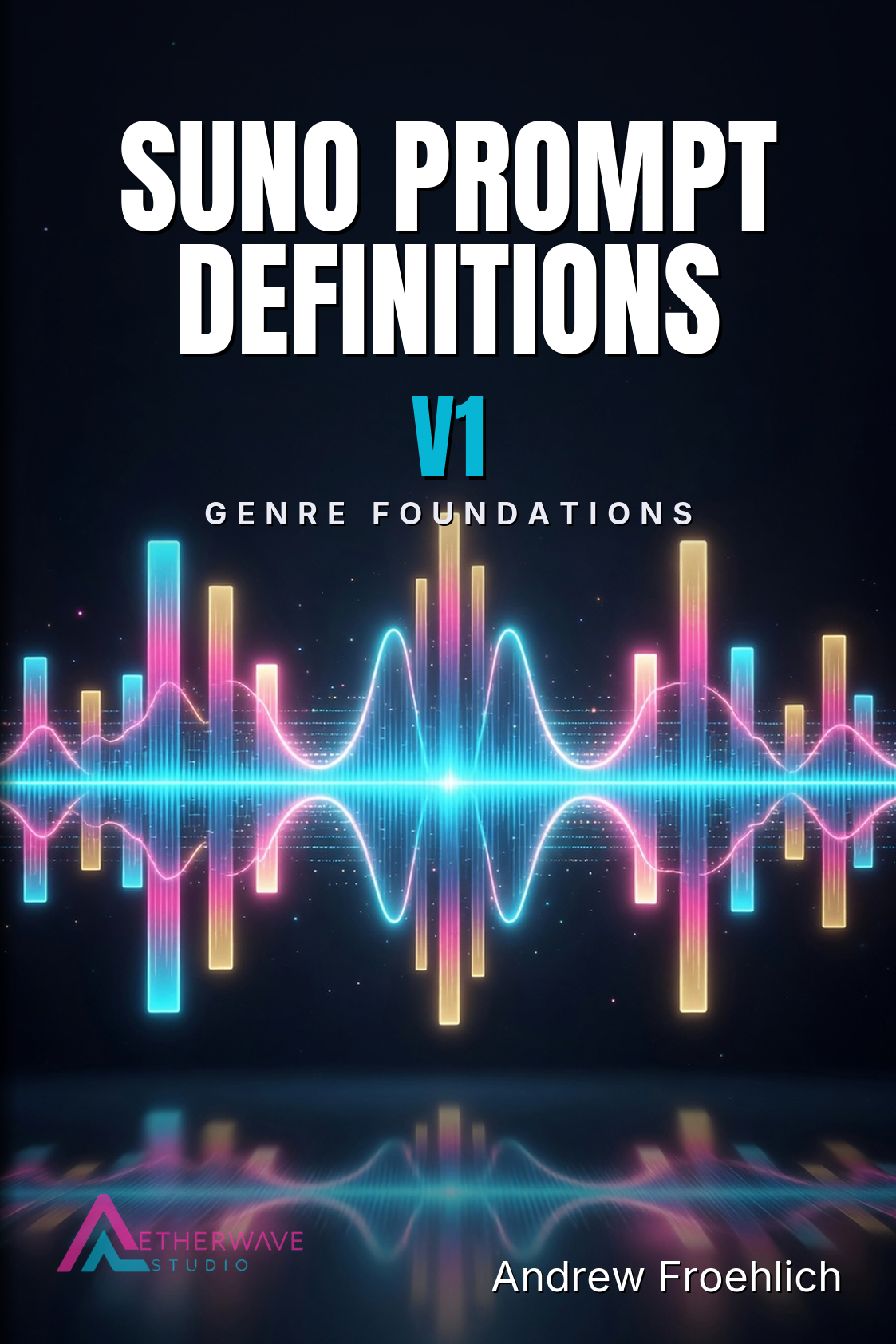
SUNO Fusion Handbook cover
The Fusion Handbook
Second edition, same series design held across covers.
AI Music Essentials as a printed paperback
The paperback itself
Because the print file either works or it does not.

And we publish comics

Three complete books, three completely different drawn styles, one pipeline: ours below, and an independent artist's after them. Every page is produced at 2100x3150, which is 7x10.5 inches at exactly 300 DPI: the print spec is built in from panel one, never upscaled into afterwards.
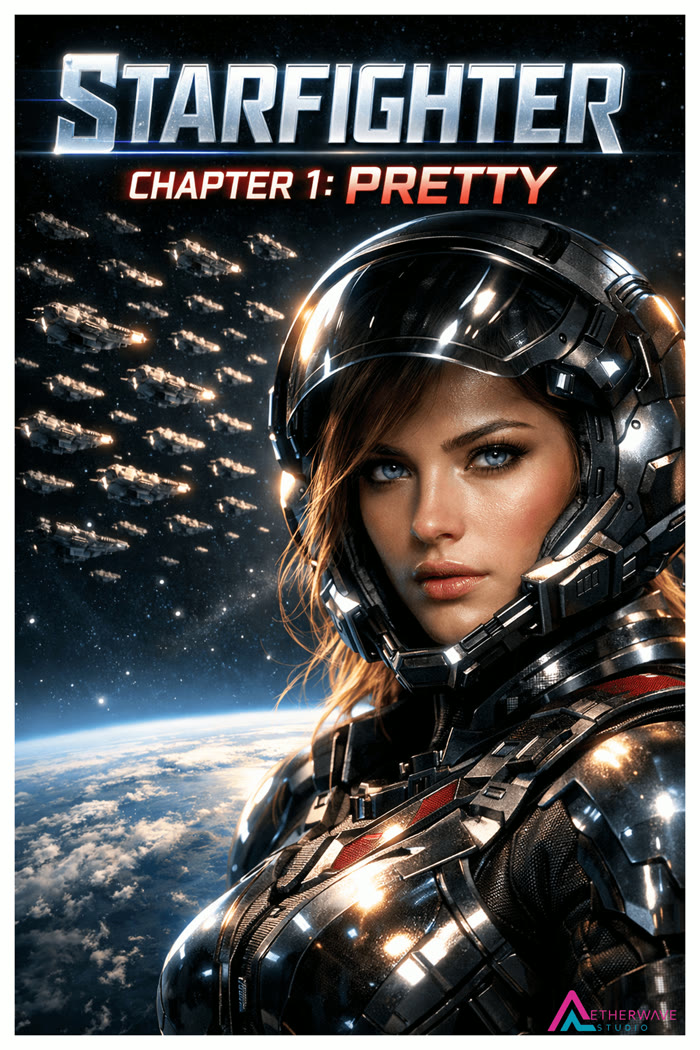
Starfighter Chapter 1: Pretty comic cover, a pilot in mirrored armor before a fleet of ships over Earth
STARFIGHTER, Chapter 1: Pretty
24 pages, published. On sale in the shop right now.
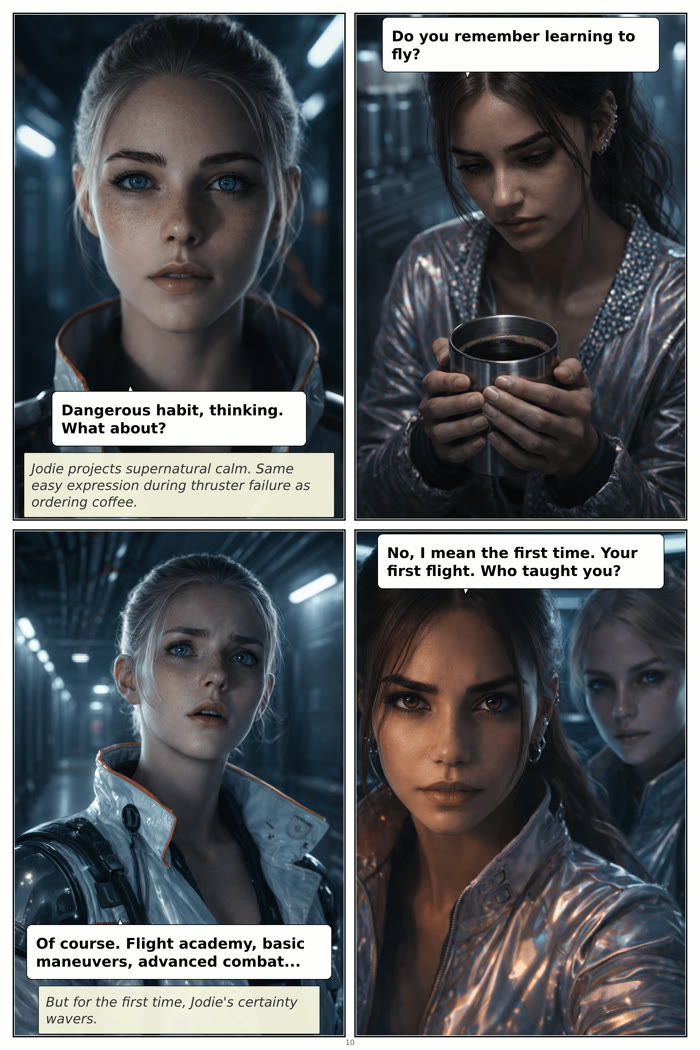
Starfighter interior page: two pilots in close conversation across four photoreal panels
Two leads held across every panel, in a photoreal style.
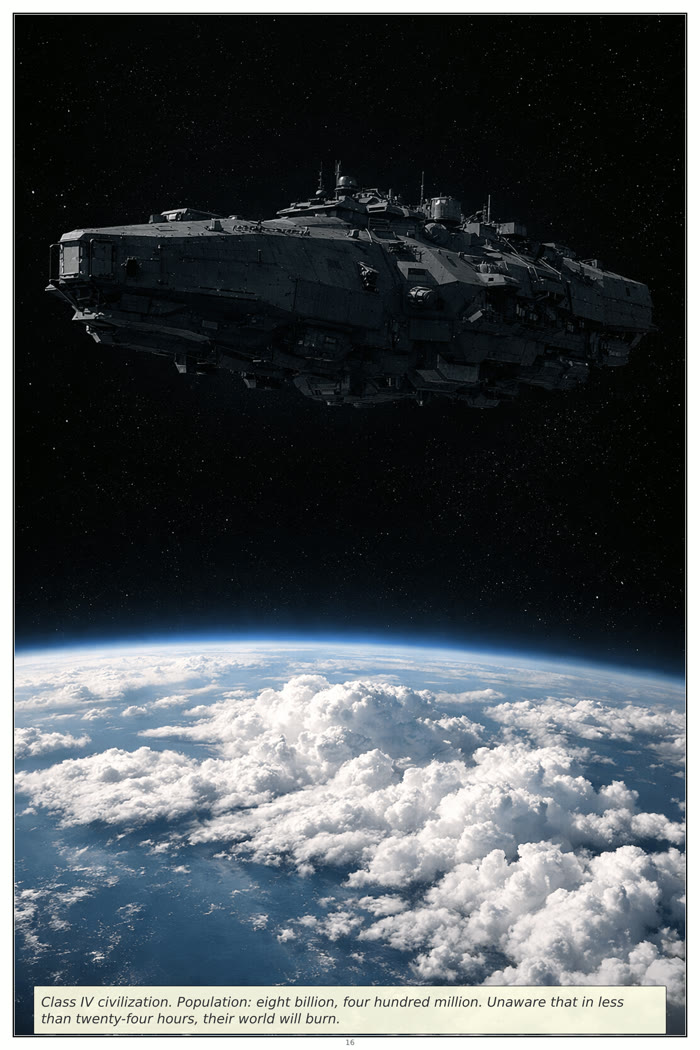
Starfighter full-page splash: a capital ship hanging over a cloud-covered planet
A full-page splash, because pacing is part of the craft.
Trinket and the Last Library comic cover, a warm lit library between rainy skyscrapers with gold title lettering
Trinket and the Last Library
A complete 12-page comic in a storybook style, produced end to end.
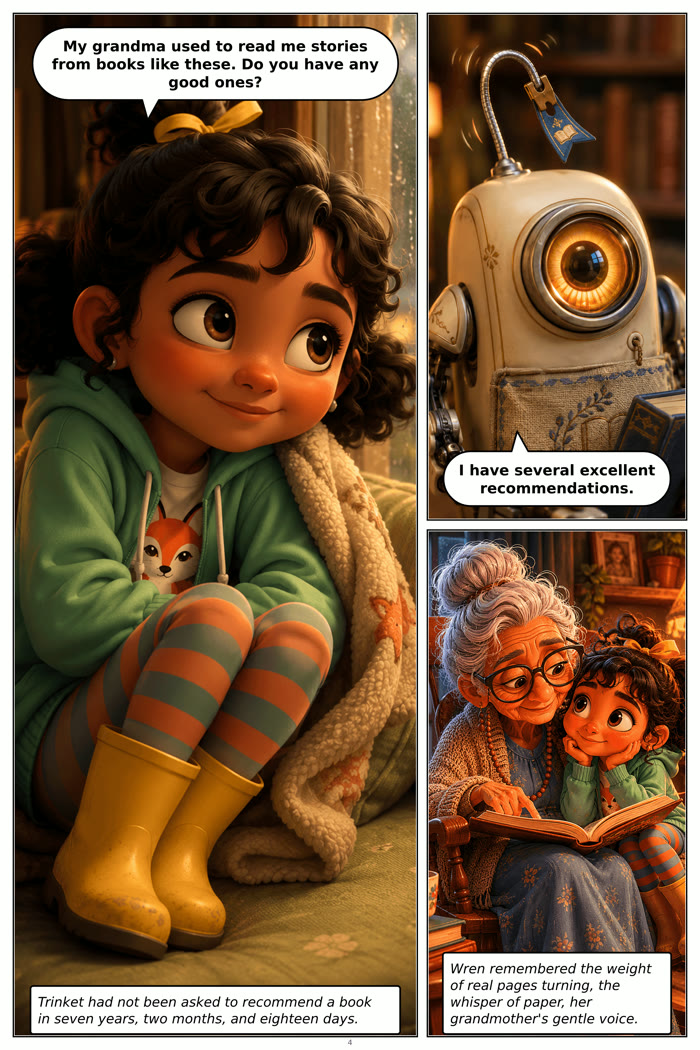
Trinket interior page: a girl in a fox hoodie talks with a small round-eyed library robot, with a memory of her grandmother reading
Composited lettering, a locked cast, and a flashback panel that still reads at thumbnail size.
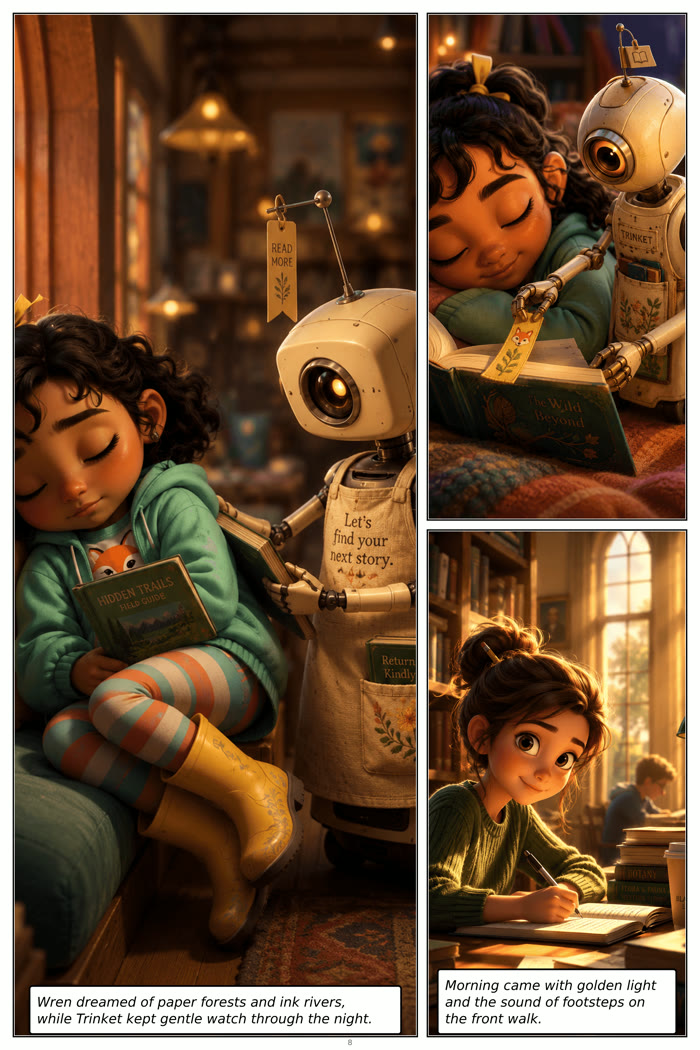
Trinket interior page: the girl asleep among books while the robot keeps watch through the night
The same girl and the same robot, pages later. Holding a cast is the craft; single images are easy.

And artists publish their own

The strongest proof is not ours to claim: it belongs to Somari, a Ukrainian artist whose first AI comic was made on this pipeline. We sponsored the book, and her feedback helped shape the Graphic Novel engine it runs on. She published it herself, under her own name.
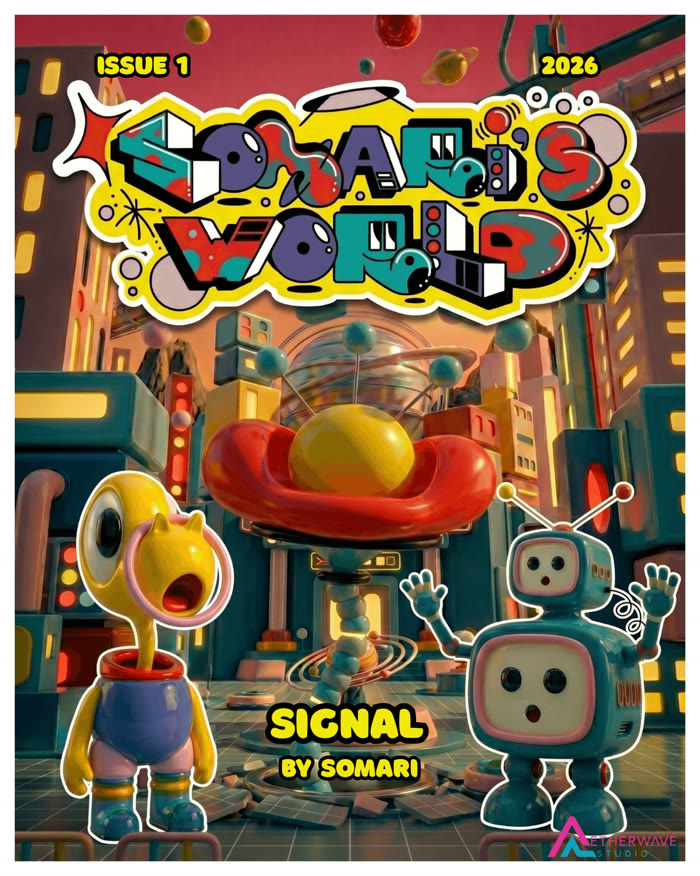
Somari's World Issue 1: Signal comic cover, two toy-like robot characters waving in a candy-colored 3D city under a graffiti logo
Somari's World, Issue 1: Signal by Somari
Published 2026. Her release announcement.
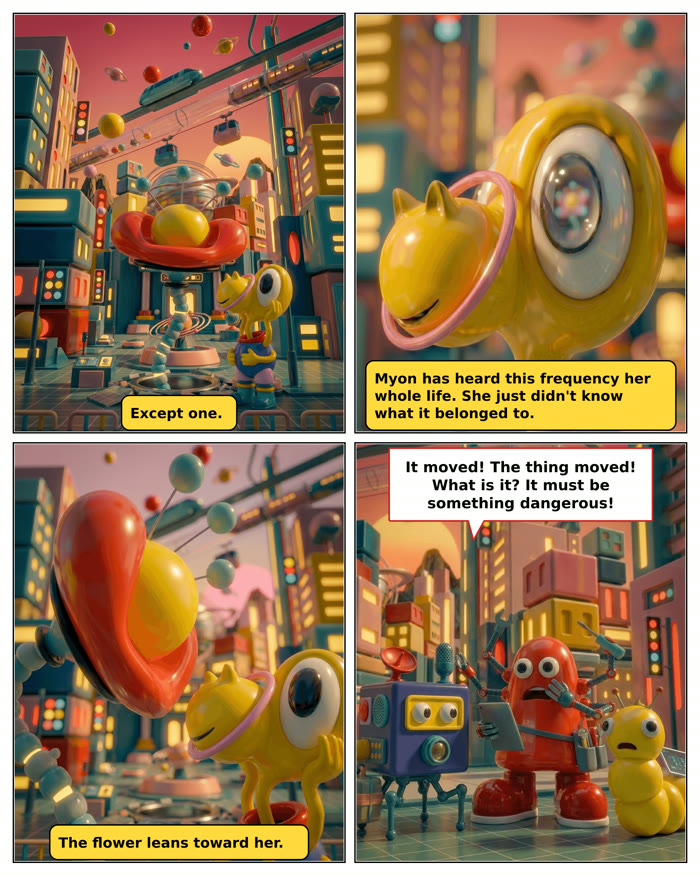
Somari's World interior page: a small one-eyed yellow character meets a giant flower-like signal dish while toy robots react in the street
A designer-toy 3D style neither of our books uses. The pipeline holds a style; it does not impose one.
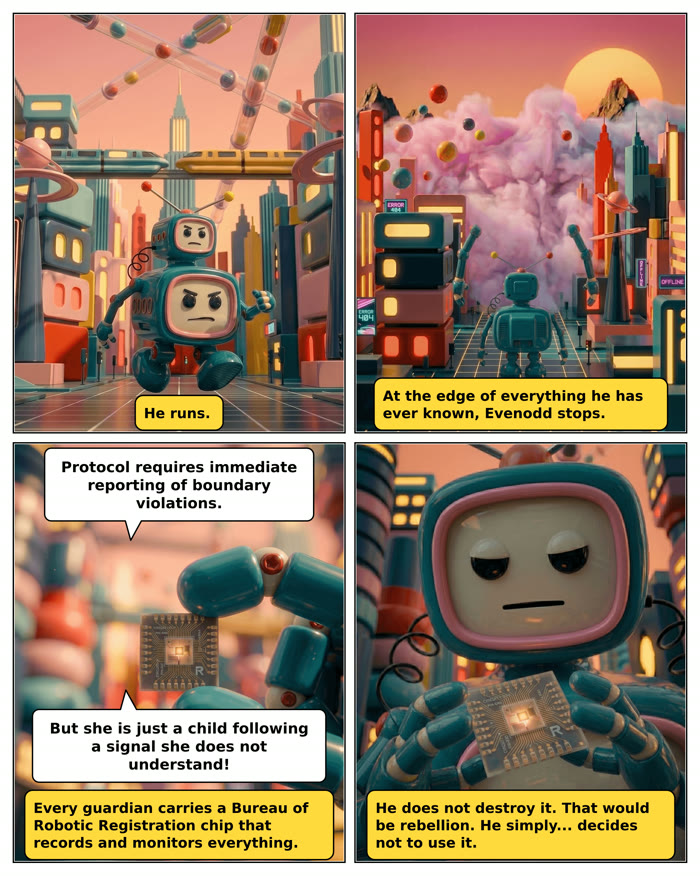
Somari's World interior page: a small robot runs to the edge of the city under a pink sky, then quietly decides not to use his monitoring chip
A real character beat, page twelve, cast still locked.

Your band as a comic. And pages that move.

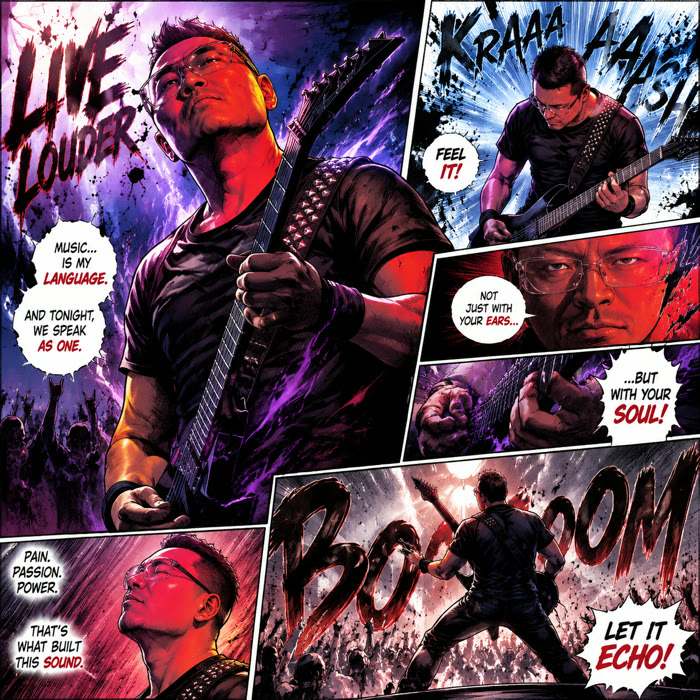
The Promo Booklet's actual use case, demonstrated on a real band: End of Eternity is a working live act, real players, and these manga pages are drawn from their photographs. That is the likeness claim made visible. And a finished page is not the end of the road: artwork animates into social video, so the comic that promotes your band can move through the feeds too. Animated pages are available on request: say so in the form and we will quote it against your book.
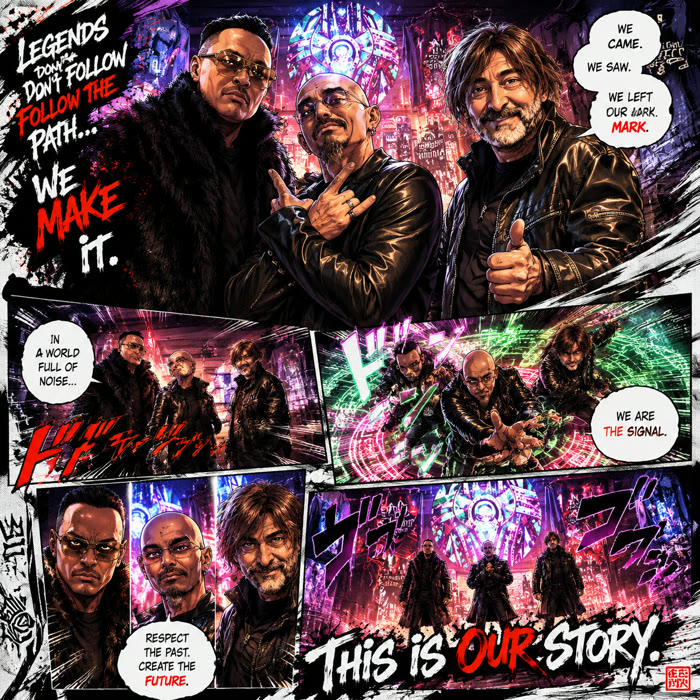
Manga style promo page: the three members of End of Eternity in leather jackets in a neon lit street, with speech bubbles reading We came, we saw, we left our mark
The band, manga style
Three real players, drawn from photographs, likeness held across every panel.
Manga style promo page: a guitarist mid-performance across six high energy panels with sound effect lettering
A performance page
Sound effects, speed lines and the same face in every panel: manga is a fourth style the pipeline holds.
The cover panel, animated
The same artwork brought to motion, ready for a feed post.
Starfighter, as a 40-second vertical promo
The published comic's pages animated and cut into a social montage with sound: one book, and then the campaign that sells it. Priced on request.

The offers

Two book packages, and a comic offering that runs a full spectrum: from a ten page promo booklet to a 48 page graphic novel, with every length in between. Everything is produced at the top quality setting; the difference is scope, never quality.


Book Formatting

$499
You wrote it and you have the cover art. We make it a publishable book.
  • Manuscript formatted to KDP print spec
    6x9 default, any KDP trim on request
  • Interior margins, gutter and bleed set for your final page count
  • Your cover art assembled into the full wraparound
    back + spine + front, spine width computed from the page count
  • Reflowable ePub for Kindle
  • Print-ready interior and cover PDFs
  • KDP metadata: title, description, seven keywords, two categories
  • One revision round
Book Formatting
Most popular

Book Production

$1,499
Manuscript to published book, end to end.
See ours: AI Music Essentials, produced on this exact pipeline.
  • Everything in Book Formatting
  • Front cover created, not just assembled: two concepts, you pick one
  • Back cover copy written and laid out
  • Chapter openers and interior styling designed for the book
  • Publishing walkthrough: we sit with you through the KDP submission, or hand you a step-by-step for your imprint
  • One revision round on every deliverable
Book a Book Production
Comics: one offering, every length

The comic ladder

Comic production is one service sold at every length. The two packages below anchor the ends of the ladder, and any page count between them is quoted per page against your script. What grows with the book is not just pages: script development and character work deepen as the story does.

10 pages · $299
Promo booklet. One locked character, built from your outline.
16 to 40 pages · quoted per page
One-shots, mini-comics, chapter one of something bigger. Script help scales to what the story needs.
48 pages · $2,499
Graphic novel. Full script development and character guidance, gated approvals.

Longer than 48 pages, a series, a book of any other shape: say so in the form and we will quote it. The ladder does not stop where the menu does.

The entry point

Promo Comic Booklet

$299
Ten pages. Your band, your brand or your story as a comic.
Trinket, above, is this scale: a complete short comic.
  • 10 finished pages, panelled, inked style of your choice
  • One main character, likeness locked across every page
  • Lettering composited, never generated, so it stays sharp
  • Print-ready PDF at 300 DPI plus a digital edition
  • Built from your outline, or we script it with you
  • One revision round
Book a Promo Booklet
The full build

Graphic Novel

$2,499
A full 48-page book, scripted and drawn with you.
See two complete comics above, one on sale right now.
  • 48 finished pages plus covers
  • Full script development and character guidance: we build the cast with you before a single page is drawn
  • Character sheets locked first, so the cast holds across the whole book
  • Print-ready interior and wraparound cover to KDP spec
  • Fixed-layout digital edition, because comic panels must never reflow
  • Approval gates, not a revision round. Script, then character sheets, then each chapter's layouts, signed off in turn. Changes at a gate are unlimited
Book a Graphic Novel

Not sure which rung is yours? Pick "Another page count" in the form and describe the book; pricing a script costs nothing.

The specs, and why they are what they are

Publishing is a specification business wearing a creative costume. These are the rules that decide whether your file ships or bounces.

The spine is mathematics, not design

A print cover is one wraparound file: back cover, spine and front cover as a single image, and the spine's width is computed from your final page count and paper stock. KDP publishes the per-page thickness for each paper.

That is why the cover is finished last, after the interior locks. A cover built before the page count is final has a spine that is wrong by definition.

Bleed, margins and the gutter

Anything that touches the page edge must extend 0.125" past it, or trimming leaves white slivers. Inside margins grow with page count, because a thicker book curves more at the binding and eats more of the inner page.

These are the two most common self-publishing rejections, and both are invisible in the manuscript.

Comics must never reflow

A prose ePub reflows: the text pours to fit any screen, and that is correct for a novel. Pour a comic page and the panels shatter.

Comics ship as fixed-layout digital editions, where every page is locked as composed. It is a different build, which is why a comic is not a book with pictures in it.

The cast has to hold for 48 pages

The hard part of AI comic work is not drawing one good panel, it is drawing the same character in panel four hundred. We lock character sheets before page one, and every page is generated against them.

It is the same discipline as our cover art work: consistency across images is the craft, single images are easy.

Lettering is composited, never generated

Dialogue, captions and titles are real type placed on the page, not pixels a model painted. Generated lettering drifts, misspells and smears; composited type is sharp at any size and can be corrected in seconds.

The same rule runs through everything we produce: anything that must be read is never left to a generator.

Print wants 300 DPI, and upscaling is not resolution

Print interiors and covers ship at 300 DPI at final trim size. A screen image blown up to hit the number prints soft, and it is the most common self-inflicted quality loss in self-publishing.

Pages are produced at print resolution from the start, not upscaled into it.

Metadata is half of being found

KDP takes a title, subtitle, description, seven keywords and two categories, and those choices decide which searches surface your book. We write them as part of every package rather than leaving them as a form you face alone at midnight.

KDP also issues a free ISBN for print if you do not bring your own.

The AI question, answered straight

KDP asks at publish time whether a book contains AI-generated content. We tell you exactly what to declare for the package you bought, because the honest answer is also the safe one: accounts get into trouble for misdeclaring, not for using the tools.

Your name is on the book. We make sure what is behind it is defensible.

How it works

Four steps, no meetings.

1. Tell me which one

Reply with the package and what you have: a finished manuscript, an outline, or an idea and a character. In-between page counts are quoted per page.

2. Send your material

The manuscript or script, names spelled the way you want them, reference art if you have any, and where you plan to publish.

3. I confirm and invoice

I confirm the scope and send a payment link. The clock starts when payment clears and your material has arrived.

4. You get a publishable book

Print-ready files, the digital edition, and the metadata. On the Graphic Novel you approve script, cast and layouts at gates before pages are finished.

Start your book

Thirty seconds. I will reply with a payment link and a short questionnaire. No call.

Prefer email? Write to [email protected] directly.

The terms, plainly

You own it outright

Full commercial rights. No royalties, no revenue share, no attribution required. Publish it, sell it, adapt it.

Your name on the cover

You are the author and the publisher. We are production, and we do not appear anywhere in or on the book unless you want us to.

Payment up front

Paid before work starts. Publications share the same monthly capacity as the artist packages, because they are produced personally.

I ask rather than guess

If something needed is missing, I will ask before starting. On the Graphic Novel that principle becomes the approval gates.